

Ensure that you’re protected — no matter the situation. Visit our service page to learn more and get a free quote.
Ensure that you’re protected — no matter the situation. Visit our service page to learn more and get a free quote.
Car Theft in Massachusetts: Does Your Insurance Policy Protect You?
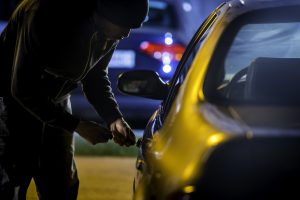
As technology continues to evolve, so do thieves. That includes car thieves, who are always looking for new ways to break into vehicles. From keyless entry hacks and relay attacks on key fobs to forgotten, unlocked doors, there are several ways bad actors can get into your car. But taking the right steps can go a long way toward protecting yourself.
You’ve probably seen the news in recent years that certain car models, like Hyundais and Kias, are particularly vulnerable to attack. If you’re worried about car theft, read on to learn which vehicle makes and models in Massachusetts are most at risk, how your auto insurance policy might already have you covered, and tips for protecting your car.
Vehicle Theft: Fast Facts
Though vehicle thefts spiked earlier in the 2020s, the National Insurance Crime Bureau (NICB) reports that car and truck thefts declined in 2025 to the lowest levels seen in decades.
Still, 659,880 cars were stolen last year, including 6,393 in Massachusetts, and the most stolen vehicle in 2025 across the nation was the Hyundai Elantra.
In 2025, Massachusetts, along with the rest of New England, experienced relatively fewer vehicle thefts than other states. But snowbirds beware: According to the NICB report, Florida experienced the fourth most vehicle thefts of all states in 2025.
Most-Stolen Vehicle Models in Massachusetts
Curious if your car makes the list of those most often targeted? Here are the top 10 most frequently stolen cars in Massachusetts (with the number of vehicles stolen) in 2025:
- Hyundai Sonata (209)
- Honda Accord (198)
- Hyundai Elantra (186)
- Honda CR-V (174)
- Honda Civic (150)
- Toyota Corolla (136)
- Toyota Rav4 (129)
- Toyota Camry (125)
- Nissan Rogue (106)
- Jeep Grand Cherokee (102)
If you drive one of these models, don’t panic — your insurance policy might just have you covered.
What Is Car Theft Insurance?
While there isn’t a specific type of policy known as “car theft insurance,” comprehensive coverage can pay to repair or replace your vehicle if it gets stolen. In addition to theft, this optional add-on to your auto insurance policy is designed to shield you from the costs of the following:
- Vandalism
- Civil disturbance
- Fire
- Weather and natural disasters
- Falling objects (such as trees, ice, and rocks)
- Animal strikes
For Massachusetts drivers, comprehensive coverage is worth considering. As a no-fault state, Massachusetts requires drivers to carry personal injury protection (PIP), which covers medical expenses regardless of who caused an accident, but no-fault laws say nothing about protecting your vehicle from theft or non-collision damage. That protection falls entirely under comprehensive coverage.
It’s also worth considering where you live and park your car. Massachusetts’s urban centers — including Boston, Worcester, and Springfield — tend to see higher vehicle theft rates, meaning city drivers may face elevated risk. Whether you’re commuting into downtown Boston or parking overnight in a high-risk neighborhood, comprehensive coverage can be the difference between a manageable inconvenience and a significant out-of-pocket loss.
While you’re typically only legally required to purchase auto liability insurance, it’s usually a good idea to add comprehensive and collision, two additional types of coverage, to your policy. Without comprehensive coverage, the full cost to repair or replace your stolen vehicle will come out of your pocket.
What’s Covered in a Vehicle Theft or Break-In
If your car is broken into or stolen, filing a claim with your auto insurer can help pay for damage to your vehicle, such as broken windows or damaged locks. As outlined above, this only applies if you added comprehensive coverage to your auto insurance policy.
Auto insurance typically will not cover the cost to replace personal possessions (such as purses, laptops, phones, or shopping bags) stolen from inside your vehicle. Check your policy details to be certain of what’s covered and what’s not.
Often, homeowners and renter’s insurance policies will pay to replace stolen items, even if they were taken from your car rather than your house. Typically, the “off-premises theft coverage” included in these policies will cover up to 10% of your total personal properties coverage limit. But this isn’t always the case. Always confirm your homeowners policy details before filing a claim.
How Car Theft Impacts Insurance Rates
High rates of vehicle theft lead to an increase in filed claims, and insurers raise auto premiums as a result. In particular, you’ll see higher premiums if you live in a zip code with more frequent vehicle theft. Massachusetts cities like Boston, Brockton, Springfield, and Lawrence have historically experienced higher vehicle theft rates, so drivers in these areas may already be feeling the impact on their premiums. Additionally, you’ll likely pay higher rates if you drive one of the more theft-prone models, including the cars listed previously.
Receiving a claim payout typically marks you as high-risk — no matter what the claim is for. If you file a claim for vehicle theft, you may see your insurance rates go up for a few years. However, your rate hike might not be as steep as it would be if you filed an at-fault accident claim.
Luckily, there are ways to lower your rates, even if you live in a high-risk area.
How to Lower Auto Insurance Rates & Prevent Car Theft
You may qualify to earn certain discounts on your auto insurance by taking the following steps to protect your car:
- Installing anti-theft devices, such as alarms, ignition kill switches, steering wheel locks, GPS trackers, and VIN etching
- Parking in a locked garage
- Raising your comprehensive coverage deductible (this will automatically lower your premium)
- Shopping around with an agent and asking about discounts
You can also help prevent vehicle theft claims by taking steps to reduce the likelihood of theft altogether. These include:
- Parking in well-lit, well-monitored areas if you can’t park in a garage
- Rolling up your windows
- Locking your doors
- Turning your engine off while your car is unattended
- Taking your keys with you when you leave your vehicle
- Installing anti-theft technology
If you’re paying a high premium, it’s always a good idea to talk with an insurance agent to see if a more affordable policy is available.
Looking for expert car insurance advice in New England? Get in touch with an agent at C&S today.