

From questions to claims, a dedicated C&S account manager is ready to handle all of your car, truck, and motorcycle insurance needs. Let’s get started today.
From questions to claims, a dedicated C&S account manager is ready to handle all of your car, truck, and motorcycle insurance needs. Let’s get started today.
Car Insurance & Pothole Damage: What You Need to Know
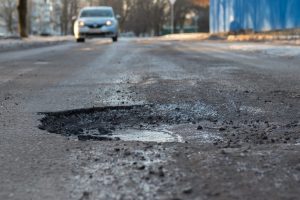
When temperatures rise above freezing during the day but drop below freezing at night, rain and melting snow seep below cracks in the road. Later, the water freezes and expands, weakening roads. The weight of cars and trucks breaks down the weakened road surface, creating potholes.
As winter thaws into spring, pothole season reaches its peak — causing damage to vehicles and headaches for drivers. While vehicle damage from potholes is usually minimal, sometimes repairs are needed, and you could benefit from filing an insurance claim.
Read on to learn more about how auto insurance policies cover pothole damage, tips for avoiding potholes, and what to do if you hit a pothole while driving.
Does Car Insurance Cover Pothole Damage?
The answer is yes — if you have collision coverage as part of your auto insurance policy. But it only makes sense in some cases to file a claim.
As a driver, you’re only legally required to carry liability coverage (in all 50 states except New Hampshire), but it’s also highly recommended to purchase comprehensive and collision coverage for your vehicle. Collision coverage reimburses the cost of damage to your vehicle resulting from collision with objects, collision with another car, or your vehicle flipping over.
Not only does collision coverage cover pothole damage, it also protects you if you hit a guard rail, telephone pole, or other object on the road, including other vehicles. However, it doesn’t cover wear and tear due to poor road conditions.
Typically, collision coverage comes with its own deductible, ranging from about $100 to $2,000. If you opt for a higher collision deductible, you can lower your premium. However, having a higher deductible means you’ll need to pay more out of pocket for vehicle repairs.
If you file a claim for pothole damage, your collision coverage will reimburse you for the cost of repairs minus your deductible. So, if the cost to repair your vehicle is lower than your deductible, it’s better not to file a claim. Hitting a pothole is considered a single-vehicle accident, for which insurers will usually deem you at fault. This means that if you file a claim for pothole damage, you could see an increase in your rates when you renew your policy.
There are some reasons why your collision insurance might not cover damage to your vehicle caused by potholes. For instance, not all insurers will cover damage to custom rims. Ask your agent whether your auto policy covers custom parts, or if you need to purchase additional coverage.
Accidents Caused by Potholes
In some cases, hitting a particularly bad pothole could cause you to collide with another vehicle or a pedestrian. If this happens, the liability portion of your car insurance will cover the cost of injuries or vehicle damage that you cause to someone else.
Unlike collision coverage, auto liability insurance does not have a deductible. Every penny the damage costs, up to your policy limit, will be paid by your insurer.
How Much Vehicle Damage Is Caused by Potholes?
While damage from potholes is typically minimal, it’s best to avoid driving over them if possible. Most often, potholes cause minor damage to wheels and tires. This can include tire blowout, broken hubcaps, and bent, chipped, or cracked wheels.
The cost to repair minor damage like this could easily fall below the amount of your collision deductible. If it’s lower than your deductible, it’s better to pay out of pocket.
However, sometimes hitting a pothole can cause more serious damage to your vehicle’s steering, suspension, and alignment systems. If you notice your vehicle “pulling” to the left or right after hitting a pothole, your steering and suspension components may be misaligned, and you should get your car looked at by a professional.
Tips for Avoiding Vehicle Damage From Potholes
To avoid hitting potholes and damaging your car, here are five key tips to follow.
- Take roads you know well. You’ll be less likely to encounter an unexpected bump.
- At night, travel only on well-lit roads. You’ll see potholes coming from further away, giving yourself time to steer around them.
- Drive slowly. You’ll have more time to assess the road conditions ahead of you.
- Brake before impact. If you let your tire roll slowly over the pothole rather than skidding as you hit it, you’ll be less likely to incur damage.
- Report potholes. Depending on what road they’re on, you can report potholes to your city, county, or state transportation department.
What Should You Do if You Hit a Pothole?
If you hit a pothole on the road and think you’ve damaged your vehicle, take the following steps after you safely pull over:
- Carefully inspect your tires and wheels. Take photos of any damage you see.
- Note the location of the pothole, time of day, and weather conditions. Take photos of the pothole and the surrounding area.
- Once you’re driving again, observe how your car handles. If it “pulls” one way or the other or your steering feels wobbly, you may need to get your vehicle checked out by a professional.
- If you’ve incurred damage, contact the nonemergency police line to report the incident and get a police report filed. It’s best to have as much documentation as possible in case you need to file a claim.
- Get two or three different estimates from licensed mechanics. Determine if it’s worth filing a claim with your auto insurance.
Your Car Insurance Questions, Answered
If you’re shopping for car insurance or looking for ways to earn discounts, get in touch with our experts at C&S Insurance today.