

Ensure that you’re protected — no matter the situation. Visit our service page to learn more and get a free quote.
Ensure that you’re protected — no matter the situation. Visit our service page to learn more and get a free quote.
Basement Flooding and Homeowners Insurance: What’s Covered and What’s Not
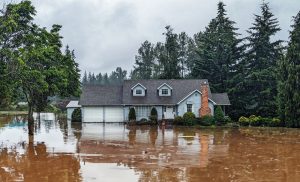
Every year, millions of homeowners across the country deal with water damage. Whether it’s from a burst pipe in the wintertime, heavy rainfall in spring, or the result of hurricane season, flooding is one of the most common (and costly) home disasters you can face. The latest data from the Insurance Information Institute shows that the average water damage claim is $15,400.
Even though flooding happens regularly, most homeowners remain uneducated about how to protect their property from the damage it can cause. One survey found that 56% of respondents were unaware that their standard home insurance policies exclude flood damage.
So how can you be sure your home is protected when the water rises? In this post, we’ll break down:
- The difference between flood damage and water damage according to insurers
- When homeowners insurance covers water damage (and when it doesn’t)
- What flood insurance covers, including its limits and basement-specific rules
- Coverage gaps to look out for and add-ons worth considering
- Steps you can take to prevent flooding and protect yourself financially
Let’s start with the question everyone asks first.
Does Homeowner’s Insurance Cover Flooding?
If you have standing water in your home, the first thought on your mind is most likely: “Will my insurance cover this?” The honest answer is it depends.
Standard homeowners insurance policies cover some form of water damage, but they don’t cover flooding in the way most people imagine. Understanding the distinction can mean the difference between a covered claim and a five-figure out-of-pocket repair bill.
“Flooding” vs. “Water Damage”
These two terms sound interchangeable, but insurance companies treat them very differently.
Flood damage refers to water that originates outside your home — storm surge, overflowing rivers, heavy rainfall that saturates the ground and seeps in. This type of event is explicitly excluded from standard homeowners policies. To be covered, you need a separate flood insurance policy.
Water damage, by contrast, refers to water that originates inside your home or enters suddenly and accidentally from a specific internal source. This is typically covered under a standard home insurance policy.
What Is Typically Covered
When water damage stems from an internal, unforeseen cause, your homeowners policy will generally step in. Common covered scenarios include:
- Burst pipes: A frozen pipe that ruptures and sends water into your basement
- Water heater failure: A tank that cracks or fails suddenly
- Malfunctioning appliances: A washing machine that overflows or a supply line that breaks
- Accidental overflow: Water from an upstairs tub or sink overflows and leaks into lower levels
In each of these cases, the key factors are the same: The source is internal, the event is sudden, and you couldn’t have reasonably predicted the event.
The Final Verdict
Homeowners insurance typically does not cover flooding caused by rain, storms, or rising groundwater — that requires separate flood insurance. However, it typically covers water damage from internal sources like burst pipes, failed appliances, or accidental overflows, as long as the cause of the damage is sudden and not the result of neglect or gradual deterioration.
| What Flooding Scenarios Does Your Policy Cover? | ||
| Standard Homeowners Policy | Flood Insurance | |
| Burst Pipes | ✔️ | X |
| Water heater failure | ✔️ | X |
| Malfunctioning appliances | ✔️ | X |
| Accidental overflow | ✔️ | X |
| Storm surge | X | ✔️ |
| Overflowing river | X | ✔️ |
| Heavy rainfall | X | ✔️ |
| Sump pump failure | X | X |
| Sewer backup | X | X |
What Does Flood Insurance Cover?
Flood insurance is primarily purchased through FEMA’s National Flood Insurance Program (NFIP). A standard NFIP policy typically covers:
- Direct physical losses caused by floods (defined as water covering at least two acres or affecting two or more properties)
- Losses resulting from flood-related erosion caused by heavy rain, storm surge, snowmelt, blocked drainage systems, or levee failure
- Certain items in your basement
Policy Limits
Standard flood insurance policies purchased through the NFIP have different policy limits, which depend on the type of property you’re insuring:
- For residential properties with fewer than five units: $250,000 for the building and $100,000 for personal property (the contents of the home)
- For residential properties with more than five units: $500,000 for the building and $100,000 in contents coverage
- For businesses: $500,000 for the commercial building and $500,000 for the contents
To get higher coverage limits, you will need to purchase flood insurance through a private carrier instead of through the NFIP.
Replacement Cost vs. Actual Cash Value
With flood insurance purchased through the NFIP, you can receive a replacement cost payout in the event of a claim, as long as you meet the following requirements:
- You’re insuring a single-family home
- You’ve resided in the home for more than 80% of the past year
- The building is insured to at least 80% of its value (or the $250,000 maximum)
If you don’t meet these requirements, you will receive an actual cash value (ACV) payout. ACV is equal to the replacement cost, minus any depreciation in value.
Who Needs Flood Insurance?
The short answer: most homeowners need flood insurance. Floods can happen just about anywhere, and in the last 30 years, 99% of U.S. counties have experienced flooding. Even areas that aren’t prone to flooding see an annual flood risk greater than the risk of a wildfire, and more than 20% of flood insurance claims come from homeowners who live outside of high-risk zones.
In some regions, homeowners may be required by their mortgage company to purchase flood insurance. These requirements often exist in “flood zones,” areas deemed high-risk by experts. But even if you don’t live in a flood zone, it’s unwise to assume your neighborhood will never experience flooding, especially as the climate continues to change.
A Note About Basement Coverage
When it comes to basements, both homeowners insurance and flood insurance have important limitations.
Under a standard homeowners policy, basement water damage is covered only when it results from an internal, sudden cause, such as a burst pipe or appliance failure. Flooding from rain or groundwater isn’t covered at all.
With NFIP flood insurance, only specific items (generally structural elements and essential equipment) are covered in a basement. These include:
- Central air conditioners
- Fuel tanks and the fuel within them
- Furnances
- Water heaters
- Sump pumps and heat pumps
- Well water tanks and pumps
- Electrical outlets and switches
- Elevators, dumbwaiters, and related equipment
- Unfinished, un-taped drywall
- Electrical junction and circuit breaker boxes
- Stairways and staircases
- Foundation elements and anchorage systems
NFIP flood insurance policies won’t cover the following items or appliances if they’re stored or used in your basement:
- Washers and dryers
- Freezers and the food stored in them
- Couches and other furniture
- Computers and TVs
- Basement improvements, like finished flooring
- Generators
- Dehumidifiers that are not considered integral to your HVAC system
It’s also important to note that flood insurance purchased through the NFIP can also cover clean-up expenses incurred after your basement floods. Pumping out trapped floodwater, removing or extracting spent cleaning solutions, treating mold or mildew, and structural drying of salvageable interior foundation elements are a few examples of what your policy may cover.
Coverage Gaps: Sewer Backup & Sump Pump Failure
Two of the most common causes of basement flooding — sewer backups and failed sump pumps — fall into a gray area. They aren’t covered by standard homeowners policies, but they’re also not covered by flood insurance. The good news is there’s an add-on for that, which means you don’t have to face damage from these events on your own.
How Water Backup Coverage Works
Most major insurers offer water backup coverage as an optional rider you can add to your existing policy to fill the gap. It typically covers damage caused when:
- Municipal sewer systems become overwhelmed and wastewater reverses into your home
- Your sump pump stops working (due to mechanical failure or a power outage) and causes water to accumulate in your basement
It’s worth being explicit: water backup coverage is not a substitute for flood insurance. These two coverages protect against different events, and if you live in a flood-prone area you may need both.
What It Costs
Water backup coverage is one of the more affordable riders out there. Most homeowners pay between $50 and $250 per year, depending on their insurer and coverage limits. Given the high cost of the average water damage claim, the math makes a strong case for adding it.
Who Should Prioritize This Coverage?
Water backup coverage is especially worth considering if you:
- Live in an older home with aging sewer lines or an outdated drainage system
- Are in a low-lying area where heavy rain frequently overwhelms local storm drains
- Have a finished basement with flooring, drywall, or belongings that would be costly to replace
- Have a history of sewer backup or sump pump issues
If your home checks any of these boxes, contact your insurer and ask about water backup coverage. It’s a small annual cost for peace of mind.
What to Do If Your Home or Basement Floods
While these flood prevention methods are useful, they aren’t foolproof. If you experience flooding, it’s easy to make costly mistakes in the first few hours — either by jumping in before it’s safe or waiting too long to take action. Here’s what to do:
First, make sure it’s safe to enter. Before you enter the flooded areas, stop and assess. If there’s any chance floodwater has reached electrical outlets, your breaker panel, or any appliances, do not enter until the power is off. If possible, shut off electricity to the affected area at the breaker box. If you’re unsure, call your utility company for help. Never wade through standing water that may be in contact with live electricity.
Once it’s safe to enter, document the damage before moving or removing anything. Take photos and video of the water level, affected walls and flooring, damaged belongings, and the suspected source if it’s visible. This documentation is the foundation of your insurance claim, so the more thorough, the better. Capture wide shots for context and close-ups for detail.
Call your insurer as soon as possible; ideally within the same day, as starting the process early keeps your claim on track and shows you’re acting in good faith. Most insurers have 24-hour claims lines, so even if it’s the middle of the night, someone will likely be there to help. When you call, report what happened, describe the source of the water, and confirm next steps. Ask your representative what documentation they need and whether you’re responsible for getting repair estimates before work begins.
Most policies require homeowners to take reasonable steps to prevent additional damage after a loss, so it’s crucial to start cleanup now. Open windows (if weather permits), run dehumidifiers and fans, and begin removing standing water with a pump or wet-dry vacuum. Move water-damaged belongings to a dry area. If flooring or drywall is saturated, document it first, then remove it if necessary to prevent mold growth.
In the aftermath, keep receipts of every expense related to the flood: equipment rentals, supplies, emergency service calls, hotel stays if your home is inhabitable. Your policy may reimburse you for these costs, and your adjuster will ask for documentation. A simple folder, either physical or digital, works fine. Don’t throw anything away until after the claim is settled.
When to Call a Restoration Company
If the flooding is extensive, the water source was sewage or grey water, or you’re concerned about mold, calling a professional water damage restoration company is a wise move. They have industrial drying equipment and can assess structural damage and contamination risk that a DIY cleanup might miss. Many restoration companies work directly with insurers and can help document the damage in a format adjusters expect.
If you’re unsure whether to make the call, err on the side of yes. The cost of remediation is typically far less than the cost of addressing mold or structural damage later.
When to Expect an Adjuster
After you file a claim, your insurer will assign an adjuster to assess the damage. Timelines vary — in a localized event, you might hear back within a few days; after a widespread storm that affects many homes at once, it can take longer. Ask your insurer for a realistic timeframe when you file. In the meantime, continue your cleanup and documentation, and don’t begin permanent repairs until the adjuster sees the damage or your insurer explicitly tells you it’s okay to proceed.
When your home is under water, the last thing you want to do is read the fine print of your insurance policy to find out if you’re covered. The good news is that protecting yourself isn’t complicated and with the right coverage in place, you’ll be in a far better position if the water ever rises.
Worried about coverage gaps? Talk with a C&S agent about water backup and flood protection. Get in touch so that we can review your current policy and help you find options that fit your home and budget.