

You deserve more than a quick quote from a call center. That’s why at C&S Insurance, we offer personalized service and expert advice while shopping competitive rates from top carriers.
You deserve more than a quick quote from a call center. That’s why at C&S Insurance, we offer personalized service and expert advice while shopping competitive rates from top carriers.
Landscaping Equipment Theft: How to Protect Your Tools and Trailers
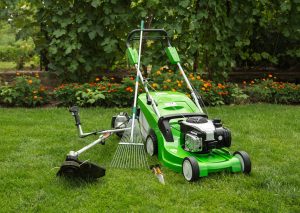
Trailers, mowers, and handheld landscaping tools are prime targets for criminals. Every year, equipment theft costs landscaping companies millions of dollars. Often, landscapers think they’re completely covered by their commercial property insurance, but standard policies can leave you vulnerable as soon as your equipment leaves the shop.
If you own a landscaping business, you know you need all your tools available in order to do your job efficiently and prevent downtime. To keep your equipment safe and your operations running, you need a good insurance policy, but also a strong security strategy. Read on for safety and security tips from our team.
Why Landscaping Tools Are Targeted
Trailers, mowers, and handheld landscaping tools are prime targets for theft. Here’s why:
- Value: Landscaping tools are extremely valuable, and demand is high for equipment during the spring and summer, increasing their value and making them easy to sell.
- They’re untraceable: Without proper security measures, it’s difficult to track down landscaping equipment once stolen.
- Universal keys: Mowers and other machines often use universal keys, making them easy for thieves to start.
- They’re easy to conceal: Handheld tools are especially easy to carry and conceal. When stored in a trailer, even large tools become easy targets.
- Lack of security: Whether due to insufficient lighting or fencing, lots, storage yards, and worksites are often under-secured. In addition, thieves may notice predictable patterns (such as the same trailer parking in the same unattended lot each night) that they can take advantage of.
Landscaping Vehicle Theft
Unfortunately, landscaping businesses are also vulnerable to vehicle theft, parts theft, and equipment pilferage when security measures are lacking. Demand for vehicle parts, such as catalytic converters, has surged in recent years.
Just one landscaping truck can support thousands of dollars in revenue for your landscaping business, so it’s important to keep your vehicles locked and be sure to invest in a comprehensive commercial auto insurance policy.
Impact of Landscaping Equipment Theft
Theft costs the landscaping industry around $100 million per year, and it’s estimated that more than 360 pieces of landscaping equipment disappear each month.
Landscapers feel the impact of these statistics in more than one place:
- Reduced productivity: First and foremost, the loss of equipment can cause operational setbacks, impacting your business’ bottom line.
- Reputational harm: When projects are delayed due to equipment loss, customers can become upset and turn to online reviews to vent their frustration.
- Insurance losses: Even if a claim for theft is approved, business owners may need to pay out-of-pocket costs and increased premiums. A single theft could increase your business insurance premiums by up to 20%.
- Contract penalties: Commercial landscaping contracts often include deadlines. If you can’t finish the work on time due to equipment loss, your business may face financial penalties or lose out on repeat business.
- Emergency rentals: Last-minute rentals to replace stolen machinery are frequently higher than what you’d pay for a rental that’s planned in advance.
Preventing Landscaping Equipment Theft: Tips & Strategies
Here are seven ways you can prevent your landscaping business from falling victim to equipment theft.
- Secure your perimeter: Chain link fencing and padlocks can be broken with bolt cutters. Be sure to secure your storage yard with more effective options, such as an electric fence, video surveillance, live monitoring, and alarm-based lighting.
- Mark your tools: Adding markings and engravings specific to your company deters thieves by making your tools harder to resell. Easily identifiable tools also help law enforcement recover them. Keep an inventory of the tools you own and their unique markings.
- Lock up: Instruct your employees to keep trailers and trucks locked, even if they’re making quick trips between the vehicle and worksite. Install hitch locks on trailers to prevent criminals from hitching your trailer to their vehicle. Use wheel locks on tractors and mowers, and always store small tools inside a locked building whenever possible.
- Use trackers and sensors: Adding GPS trackers to equipment deters criminals and helps you recover stolen items. Engine activation sensors on backhoes, tractors, and skid steers can alert you if someone starts up your machinery after hours.
- Ensure trailers are hard to access: If possible, back covered trailers against a fence or building wall so opening the doors becomes difficult or impossible.
- Remove batteries: When handheld equipment is in long-term storage, take out the batteries.
- Train employees: Educate everyone in your company about common theft tactics and the security measures they can take to thwart them. Establish practices such as locking vehicles, securing tools, and a sign-in/sign-out system for equipment. Encourage all employees to report suspicious activity or attempted theft.
Common Insurance Gaps for Landscapers
Many landscaping businesses carry a general liability policy and assume they’re fully covered. But it’s important to ensure you have the proper coverage for your equipment, so you can get it replaced in the event of theft.
Standard landscapers’ insurance may exclude tools in transit from coverage or have sub-limits that fall short of the actual replacement value of certain equipment, such as mowers and skid steers. As a landscaper, you should also have inland marine coverage, which covers your tools and equipment while in transit, at a job site, or sitting in a trailer overnight. Inland marine coverage can be added to your existing business policy, with limits that reflect your equipment’s actual value.
When setting up that coverage, it’s important to understand how the limits are structured. Policies generally take one of two approaches: A blanket limit provides a single pool of coverage that applies across all your equipment, which is simple to manage and works well for a range of smaller tools. Scheduled (or itemized) coverage lists each major piece separately with its own limit and is usually the safer choice for high-value items such as mowers or skid steers (because it ensures each one is insured for its full value). It’s also a good idea to check whether your policy pays out on a replacement cost or actual cash value basis. Replacement cost covers what it takes to buy a new equivalent, while actual cash value factors in depreciation, meaning you’d receive less for older equipment.
Your commercial auto insurance policy covers liability claims for a trailer while it’s attached to an insured vehicle. But coverage for physical damage to the trailer itself usually needs to be added separately.
To cover rented or borrowed equipment, you typically need to add an endorsement to your commercial auto insurance policy or inland marine coverage. It’s a good idea to check what your policy does and doesn’t cover before renting any high-value equipment.
Insurance for Landscapers in New England
As a landscaper, you have specific insurance needs that tackle the risks your business faces. At C&S, we’re experts in landscapers’ insurance. Get in touch today to learn more about how we can help your business.