

Ensure that you’re protected — no matter the situation. Visit our service page to learn more and get a free quote.
Ensure that you’re protected — no matter the situation. Visit our service page to learn more and get a free quote.
Swimming Pool Insurance in MA
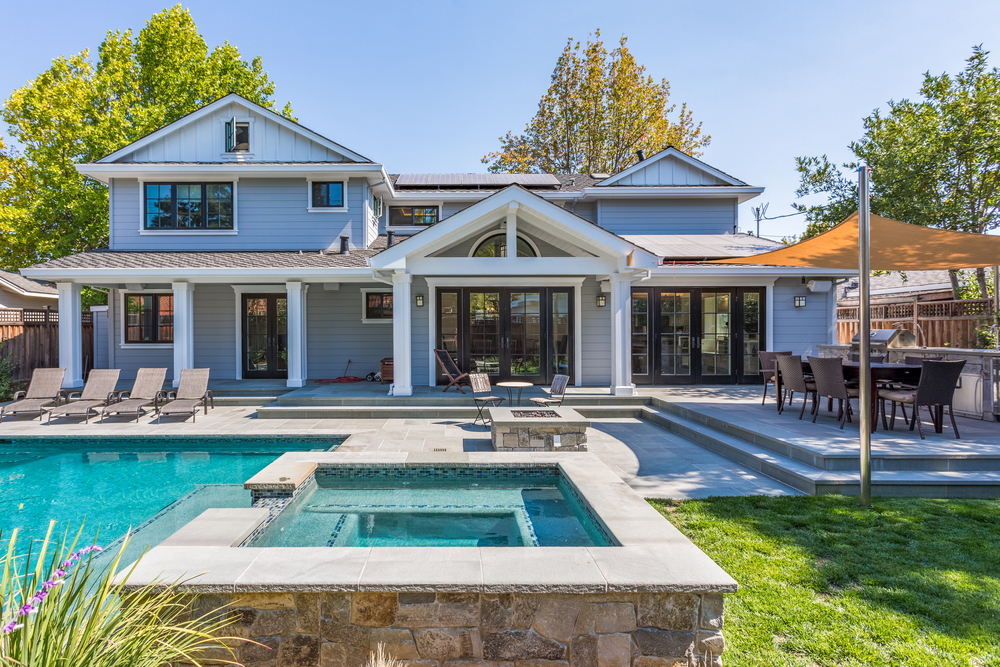
Pools are a great way to stay cool during the summer and have fun with your family. But it’s important to keep in mind that they also pose safety risks. When you install a pool, your insurance company keeps the dangers of pool ownership top of mind. And while some insurance providers are more lenient than others, in general, your homeowners insurance policy needs to be updated immediately after your pool is finished.
With a pool, you will almost always see an increase in your premiums, as you need to change your liability limits to protect yourself from liability claims, and because you must raise your property coverage to account for the increased value of your home.
If you’re thinking of installing a pool (or have already begun the process) it’s important to inform your insurance company right away.
Insurance Risks Posed by Pools
Children are highly at risk of injuring themselves around a pool. Between 2022 and 2024, there were an estimated 6,300 non-fatal pool- and spa-related drowning injuries treated in U.S. emergency rooms involving children under age 15.
Digging deeper, the data shows that 73% (nearly three-quarters) of non-fatal drownings in this period involved children younger than 5.
Beyond drowning-related injuries, pools can also pose other types of risks, including:
- Slips and falls on wet patios
- Concussions and other injuries due to jumping or diving in the pool
- Injuries due to horseplay and other risky behaviors in the pool
- Illness or infection due to unclean water
There are also legal risks that come with owning a pool. As the homeowner, you are legally responsible for taking reasonable measures to protect children and others from potential danger. You can be held liable if, for instance, a child in your neighborhood wanders into your backyard and enters your pool unsupervised, resulting in injury.
For these reasons, insurance companies consider pools an “attractive nuisance,” much like trampolines or construction projects. While pools can raise the value of your home, it’s also important to understand the cost and responsibility that they bring.
Steps to Take When Installing a Pool
You’ll need to get in touch with your insurance company or agent as soon as possible when installing a pool. Here are the steps you can take to ensure you won’t have coverage gaps and that your policy is updated accurately.
1. Give Your Insurer the Details
When you decide to install a pool, contact your homeowners insurance provider or your insurance agent before construction begins. You will need to let them know the following information:
- What type of pool you’re building (in-ground or above-ground)
- The pool’s dimensions
- What material the pool is made from
- What type of safety features you plan to install, such as a lockable fence, self-latching gate, and pool alarms
- Plans to install any accessories, such as slides or diving boards
Typically, insurers require pool owners to have a lockable fence that is at least four feet tall, with a self-latching gate. If you don’t install one, you risk policy cancellation and denied claims.
It’s also possible that your insurance company may cancel your policy if you put a pool on your property. Some carriers don’t have the “appetite” for the concerns pools can create.
Keep in mind though, high-risk pool features such as diving boards and pool slides are often a deal-breaker, even among companies that allow pools. So, if you’re thinking of adding any type of pool or hot tub to your property, it’s a good idea to contact your agent or carrier ahead of time to learn more about their policies.
2. Raise Your Liability Limits
Then, ask your insurer or agent to raise the liability portion of your policy. The average home insurance policy comes with liability limits of around $100,000. But with a pool on the property, your risk level increases dramatically. Raising liability limits to $500,000–$1 million (or more) is often recommended.
Consider raising your limits even higher if you have significant assets (or invest in a high-net worth policy). You can also take out an umbrella liability policy if you’re looking for broader protection.
3. Understand How Your Pool is Protected
In addition to shielding yourself from liability claims, it’s important to ensure that the pool itself is protected in case it sustains damage.
Depending on your insurance company, your pool might be classified under different portions of your homeowners policy. Some insurers cover pools under “other structures” coverage (similar to how a shed is protected), while other providers place it under dwelling coverage with the physical structure of your home. Above-ground pools may be covered by the personal property portion of your policy, especially if the pool can be stored during colder months.
Regardless of how your pool is covered, you’ll want to make sure each portion of your homeowner’s policy has high enough coverage limits to protect your home, your pool, and your other property. Also, be sure you have sufficient coverage to protect your deck, patio, fence, pool house, and any other surrounding structure you add to your home.
When Damage to Your Pool Isn’t Covered
While damage to your pool can be covered by your homeowner’s insurance policy, it isn’t always. Homeowner’s policies generally exclude any damage caused by the following events:
- Earthquakes
- Flooding
- Burst pipes
- Hurricanes
- Water or sewage backup
- Wear and tear
- Lack of maintenance
However, you can often purchase add-ons to include extra coverage for these kinds of events.
Pool Safety Tips to Minimize Liability Claims
To reduce the risk of guests (both invited and uninvited) getting injured and filing a claim, here are 10 key rules you can follow to keep your pool safe:
- Install a fence around the pool. It should be at least four feet high and have a self-closing, self-latching gate. This is a requirement for many insurance companies.
- Install a pool alarm. Alarms can alert you when someone enters your patio or pool.
- Utilize safety covers. Covering your pool when it’s not in use ensures no one can enter it unsupervised. Be sure the cover does not retain water above the surface.
- Keep your pool clean. Prevent harmful bacteria growth by following a regular cleaning schedule. Carefully follow the instructions for use on any chemicals used. Test your water quality regularly and confirm your filtration system and pump are running optimally to maintain proper pH and disinfection levels.
- Remove tripping hazards. Keep the area around your pool clear and also remove any objects that could be used to climb over the fence.
- Supervise children. Never let children swim or play near your pool without an adult watching. It’s also a good idea not to allow adults to swim alone.
- Learn CPR. This skill can save lives.
- Look out for cracks, loose areas, and corrosion on pool walls, decking, railings, and ladders. Inspect drain covers and filters regularly to ensure they remain intact and securely attached.
- Keep safety equipment nearby. This includes a reach pole, flotation device, and first-aid kit.
- Establish clear pool rules. Instruct your family and guests not to run on the patio, not to dive in the shallow end, and to never swim without adult supervision.
By following these guidelines, you can help your family have a safe, happy summer and make the most of your new pool.
The Bottom Line: How Much Does a Pool Add to Your Insurance Premium?
Adding a pool to your property could increase your premium by about $50 to $100 per year. In addition to insurance policy increases, you should also consider the extra cost of utilities, property taxes, and pool maintenance. However, adding a pool can also add value to your home.
Because of the added cost, you might be tempted to avoid mentioning the pool to your insurer. But keep in mind that insurance companies conduct regular inspections on their clients’ property, often before your policy renews. These visits may be unannounced and may happen when you’re not even at home. Inspectors typically survey the exterior of your home, looking for signs of damage, disrepair, or undisclosed risks (e.g. backyard trampolines and pools).
The smart move is to be upfront and proactive. If you’re planning to build a pool, talk to your agent first. Failing to disclose a pool gives them the ability to deny future claims or immediately cancel your policy, leaving you without coverage and potentially owing hundreds to thousands in unexpected costs.
Where can I buy swimming pool insurance?
You don’t need to buy swimming pool insurance specifically; most often a pool is covered under the terms of your homeowner’s policy.
If your home insurance carrier is willing to write your policy, knowing that you have a swimming pool on the property (more on this “if” below), then your policy will automatically include coverage for 1.) damage to the pool, AND 2.) any personal liability that could result from a guest injury.
But there are important questions to ask about both types of coverage—mainly, are my coverage limits high enough? Here’s a closer look at both.
Does home insurance cover damage to a swimming pool?
The short answer is probably. This is assuming your carrier knows the pool is there, AND assuming the damage was caused by a “covered peril” like fire or wind. Insurance would NOT cover damage caused by shoddy pool maintenance or neglect.
In order to confirm you do indeed have coverage and have it in the proper amount, you need to understand how your company classifies the pool. Some insurance companies consider the pool to be a part of your house itself. Other companies consider a pool to be an “external structure,” much like a shed or a gazebo. In the case of above-ground pools, your insurer might consider the pool to be a type of personal property—like a boat or a jet ski.
If your pool is considered a part of your home’s structure, make sure your agent addresses its worth in calculating your home’s replacement cost value (RCV). If your pool is considered a detached structure, you’ll need to list it expressly on your policy in order to have coverage. Ditto for hot tubs and the decks around them. You should also look at how much coverage you have for detached structures or personal property; these limits are often set as a percentage of your home’s RCV. They may be insufficient.
Does home insurance cover me if someone gets hurt in my swimming pool?
To an extent, yes. Your home insurance policy includes protection called personal liability coverage. This is the same coverage that kicks in if someone slips on your driveway or tumbles down your stairs. When it comes to pool-related injuries however, there are a few key points to remember:
- You and Your Household Members Are NOT Covered by Liability Coverage.
Unfortunately, if you or a family member were to suffer an injury in/around the pool, you’d have to rely on your health insurance and savings to cover the medical expenses.
- You May Be Held Liable for Injuries Even if the “Guest” Did Not Have Permission to Swim.
Pools are considered an attractive nuisance. This means if a neighborhood child wanders into your yard and gets hurt or killed, you may still be at fault—even if you didn’t invite the child, and even if you maintain the state-required fencing. Your liability coverage would likely help you in this case, but it may be inadequate because…
- Pool Owners Often Need Higher Liability Limits
The average home insurance policy comes with liability limits of around $100,000. But with a pool on the property, your risk level increases dramatically. Raising liability limits to $500,000-$1 million (or more) is often recommended. You may also want to consider buying umbrella insurance, which increases your liability protection without causing a huge spike in your home insurance premium. Read more here: Do I Need Umbrella Insurance?
Will my insurance company cancel my policy if I build a swimming pool?
It’s possible. Some carriers don’t have the “appetite” for concerns pools can create. Many carriers will allow pools, so long as there’s a locked barrier that meets all state-approved dimensions. Keep in mind though, high-risk pool features like diving boards and pool slides are often a deal-breaker—even among companies that allow pools. So, if you’re thinking of adding any type of pool or hot tub to your property, it’s a good idea to contact your agent and learn more about your carrier’s policies.
How will my insurance company know if I build a pool?
Insurance companies conduct regular inspections on their clients’ property, often before your policy renews. These visits may be unannounced and may happen when you’re not even at home. Inspectors typically survey the exterior of your home, looking for signs of damage, disrepair, or undisclosed risks—e.g. backyard trampolines and pools. So, the smart move is to be upfront and proactive. If you’re planning to build a pool, talk to your agent first.
What to Know Before Building a Swimming Pool in Massachusetts
Depending on your town’s requirements, you may need to get construction approval from the local Board of Health or similar governing body. You may also need to follow specific rules related to your filtration system, pool water source, pool location within your yard, wastewater disposal, and fencing requirements. Even though general requirements for pool fencing are four feet above finished ground with self-closing and self-latching gates, your town’s regulations may be even more specific.
Here are some helpful links for backyard pool requirements in some of the communities C&S serves:
- Swimming Pool Requirements & Application for Mansfield, MA
- Standards for Swimming Pools in Dedham, MA
- Swimming Pool FAQs in Norwood, MA
- Swimming Pool Instructions in Needham, MA
- Swimming Pool Regulations in North Attleboro, MA
- Standards for Swimming Pools in Dighton, MA
- Building Codes on Swimming Pools Rehoboth, MA
- Swimming Pool Regulations Mendon, MA
Pool Insurance in Massachusetts
If you’re looking to shop around for a homeowners insurance policy that protects your house, pool, or other property, look no further than C&S Insurance. We’ve been in the business of Massachusetts insurance for more than 60 years and have a dedicated team of experts ready to help you find the best deals and ways to save.