
Top 6 Winter Driving Risks — and How Your Auto Policy Responds
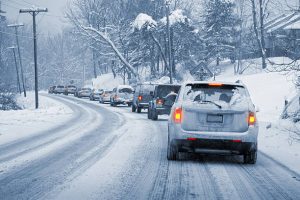
Driving in the winter can be challenging, even for those used to snow, slush, and ice. Nearly 1 in 4 weather-related crashes occur during winter conditions, and icy roads alone contribute to more than 150,000 accidents every year. To help you stay safe on the roads, avoid common claims, and keep your auto insurance rates in check, we’ve outlined the top winter driving risks and how your policy may respond. Read on for expert tips from C&S Insurance to stay prepared this season.
6 Biggest Winter Driving Risks
1. Leaving snow on your vehicle
Clearing snow and ice from your car is essential. Driving with obstructed visibility contributes to roughly 20% of winter crashes.
Even snow on your roof can slide forward under braking and cover your windshield. Clear all windows, mirrors, lights, reflectors, the hood, and the trunk before you drive.
2. Driving too fast
Posted speed limits apply to normal conditions—not snowstorms or icy roads. Speeding is a factor in about 70% of winter crashes.
In Massachusetts, you can receive a violation for driving too fast for conditions, even if you’re below the posted limit. A speeding ticket can raise your auto premium by an average of 31%.
Give yourself additional travel time during storms to avoid rushing.
3. Following too closely
Safe following distance is always important, but especially in winter.
Stopping on snow can take 5–8 seconds; on ice, 10–14 seconds. Rear-end collisions increase by about 40% during winter conditions.
Anti-lock brakes require steady, controlled pressure to perform correctly. And while all-wheel drive helps with acceleration, it does not shorten your stopping distance. Snow tires, however, can improve braking performance.
Being at fault in a rear-end collision may affect your insurance premiums for up to six years. Keep extra distance.
4. Staying bundled up while driving
Heavy coats, gloves, and boots can reduce your ability to control the vehicle. Bulky sleeves limit steering motion, mittens reduce grip, and large boots make pedal control more difficult.
Warm the car beforehand or wait until it heats up so you can remove extra layers. Never warm up your vehicle in a closed garage due to carbon monoxide risk.
5. Skipping vehicle maintenance
Winter amplifies mechanical issues, especially low tire pressure and worn wipers.
Check:
- Tire pressure and tread depth
- Condition of windshield wipers
- Wiper fluid levels
To prevent fuel line freeze, keep your tank as full as possible, store your car in a garage when you can, and use fuel additives like dry gas if recommended.
6. Over-relying on vehicle technology
Features like lane assist, anti-lock braking, and backup cameras can help, but they don’t replace safe driving. Snow and slush can obstruct sensors and cameras.
Anti-lock braking works only with steady pressure, not abrupt slamming. Maintain safe distance and reduce speed regardless of what technology your car offers.
How to Avoid Sliding on Black Ice
Black ice is a transparent, hard-to-detect layer that forms quickly on cold surfaces, particularly bridges and shaded roadways.
Watch for a glossy sheen and changes in road noise. If you hit ice:
- Stay calm.
- Lift your foot off the accelerator.
- Avoid sudden braking or steering.
- Keep the wheel straight.
- If the rear of your car slides, gently steer in the direction of the slide.
Avoiding high-risk roads, and giving yourself extra travel time, reduces your exposure to icy patches.
Winter Weather Driving Tips
Preparing your car
- Keep a winter safety kit: scraper, shovel, sand/salt, non-perishables, blankets, bottled water, flashlight, jumper cables, and a portable phone charger.
- Consider snow tires if you frequently drive in winter conditions.
- If you don’t drive daily, start your car every few days in a well-ventilated area to avoid a dead battery. Never run the car in a closed garage.
Monitoring the forecast
- Check local news, traffic, and weather alerts.
- Sign up for municipal notifications.
- Drive only if necessary during active winter weather; reschedule or go remote when possible.
Driving safely
- Turn on headlights and keep them clear.
- Reduce speed and increase following distance.
- Use caution near large snowbanks.
- Avoid cruise control to maintain full control.
- Use extra care on bridges and overpasses.
- Do not pass snowplows or sand trucks.
- Always wear your seatbelt.
- Do not check your phone while driving.
If you break down or get stuck
- Share your location with a trusted person during winter travel.
- In low-coverage areas, tell someone your route and ETA.
- If you become stranded, stay in your vehicle if it’s safe.
- Ensure your exhaust pipe is free of snow to prevent carbon monoxide buildup; crack a window slightly.
- Once the exhaust is clear, run the heater for about 10 minutes each hour.
How Your Auto Policy Responds to Winter Accidents
Unsafe driving on snowy or icy roads can lead to liability if you cause an accident. Follow the precautions above to reduce claims.
Insurers may deny a claim if they find evidence of neglected maintenance—such as bald tires or faulty brakes.
If an accident occurs:
- Document weather conditions
- Photograph vehicle damage
- Gather witness statements
Cold weather doesn’t have to mean unsafe driving. For personalized guidance or ways to save on your auto policy, connect with a C&S Insurance agent today.